
There is something deeply magical about stepping into a garden that feels like it belongs in a fairy tale. A whimsical garden is not just a collection of plants and flowers — it is a living, breathing world of imagination where color, texture, sculpture, and nature come together in the most delightful, unexpected ways. Whether you have a sprawling backyard or a modest outdoor space, a whimsical garden invites you to throw out the rulebook and replace it with wonder.
Unlike formal or minimalist garden styles, a whimsical garden thrives on personality. It celebrates the quirky, the handmade, the repurposed, and the fantastical. It is a space where a mossy stone pathway can wind into a secret reading nook, where fairy lights drip from ancient trees, and where a vintage teapot becomes a planter overflowing with cascading petunias. It is a garden that tells a story — your story — and every visitor who wanders through it will feel the enchantment.
In this guide, we will walk you through more than twelve breathtaking whimsical garden ideas that will transform your backyard into a unique outdoor sanctuary. From fairy gardens and cottage-style plantings to magical water features and upcycled art installations, each idea is designed to spark your creativity and give you practical, actionable inspiration. Whether you are starting from scratch or looking to add a touch of magic to an existing garden, there is something here for every dreamer.
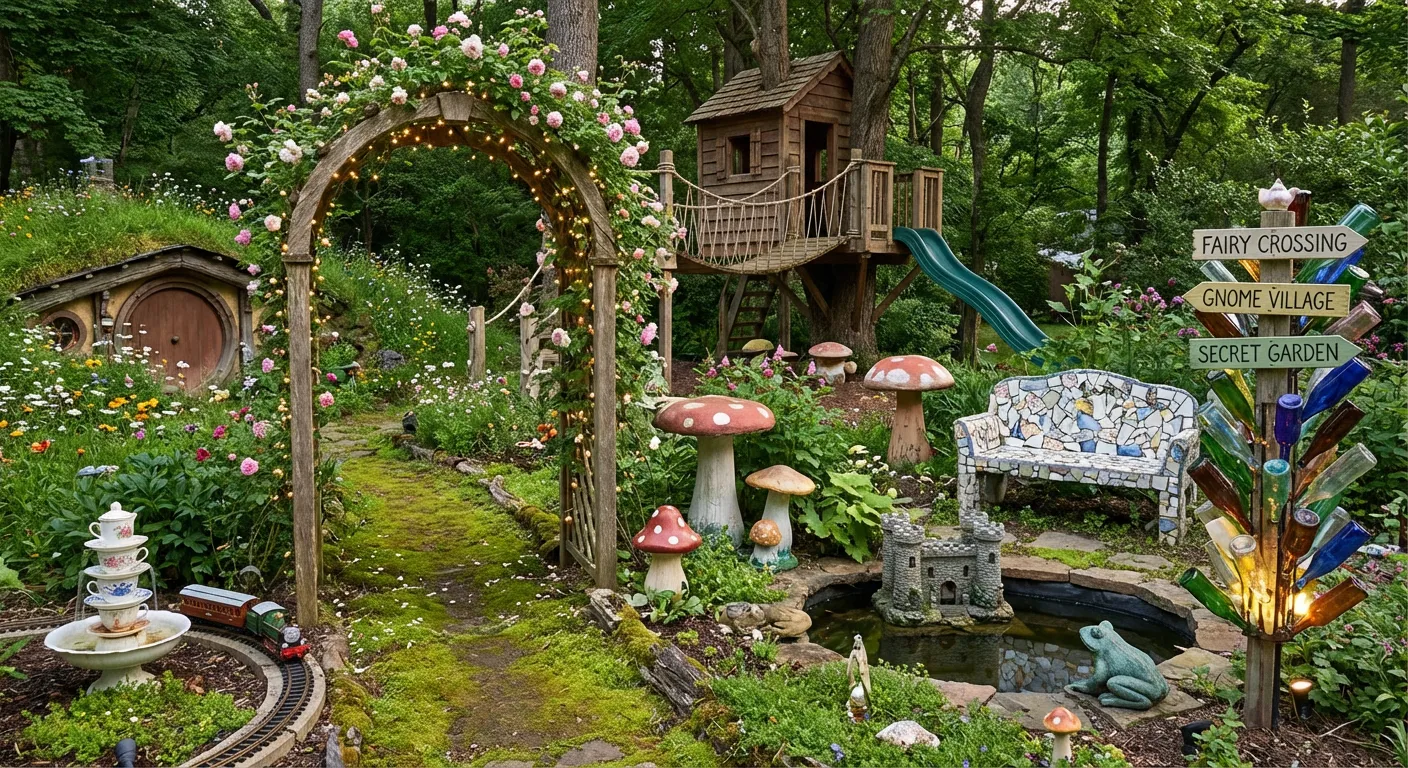
1. Create a Charming Fairy Garden Retreat
The fairy garden is perhaps the most iconic element of whimsical outdoor design, and for good reason — it captures the imagination of both children and adults alike. A fairy garden is essentially a miniature world, carefully crafted to look as though tiny magical beings have made it their home. The beauty of this concept is that it can be as simple or as elaborate as you desire.
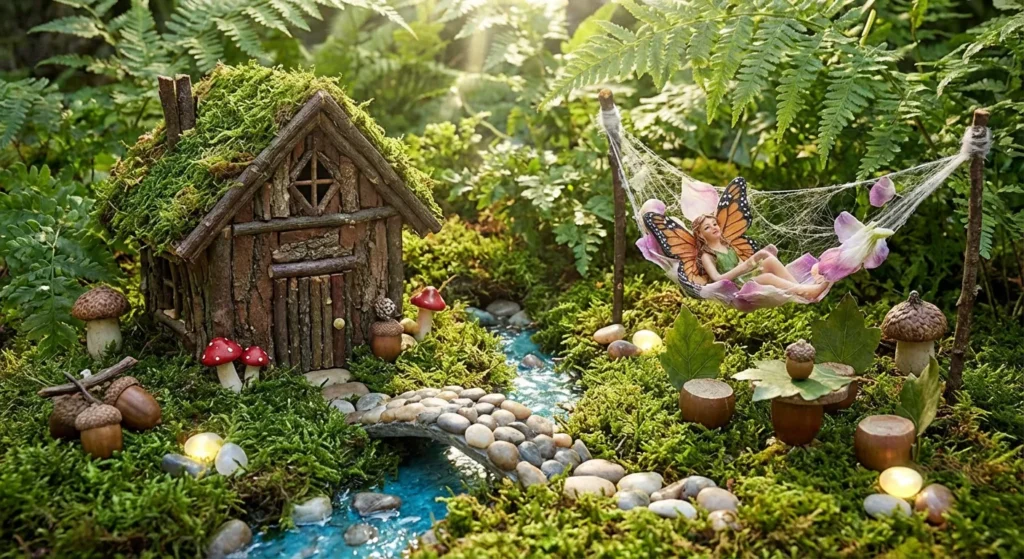
To begin, choose a dedicated corner of your garden, a raised bed, a large container, or even a hollowed-out tree stump. The container or space itself becomes the stage for your miniature world. Fill it with a base of rich, well-draining soil and layer it with soft moss, which gives that quintessential lush, forest-floor feeling. Moss is easy to source from garden centers or even from damp, shaded spots in your yard, and it provides an immediate sense of age and enchantment.
Once your base is established, begin adding the elements that bring the fairy world to life. Tiny wooden or resin fairy houses are widely available, ranging from rustic log cabins to elaborate mushroom cottages. Place them at varying heights — nestled among plant roots, perched on small rocks, or tucked beneath the spreading leaves of a hostas plant. Add a miniature stone pathway using small pebbles, a tiny wooden bridge over a shallow dish of water, or a winding fence made from twigs lashed together with twine.
Plant selection is crucial in a fairy garden. Opt for plants that remain small and have interesting textures. Baby tears (Soleirolia soleirolii), miniature thyme, mondo grass, sedum varieties, and dwarf ferns all work beautifully. Add a pop of color with miniature violas or creeping jenny. The goal is to create a sense of scale — the plants should feel like towering trees and lush meadows from the perspective of a tiny fairy inhabitant.
Accessories are where the real magic happens. Small clay pots stacked as a chimney, a thimble used as a birdbath, a walnut shell serving as a boat on a small mirror pond — these tiny, clever details are what make a fairy garden truly enchanting. Change the accessories seasonally to keep the garden fresh and tell an evolving story throughout the year.
2. Wind Whimsical Pathways Through Nature
One of the most transformative things you can do in any garden is to replace a straight, utilitarian pathway with one that winds, curves, and discovers its own direction through the landscape. A meandering pathway does not just connect point A to point B — it invites exploration, slows your pace, and encourages you to notice the small, beautiful details on either side.
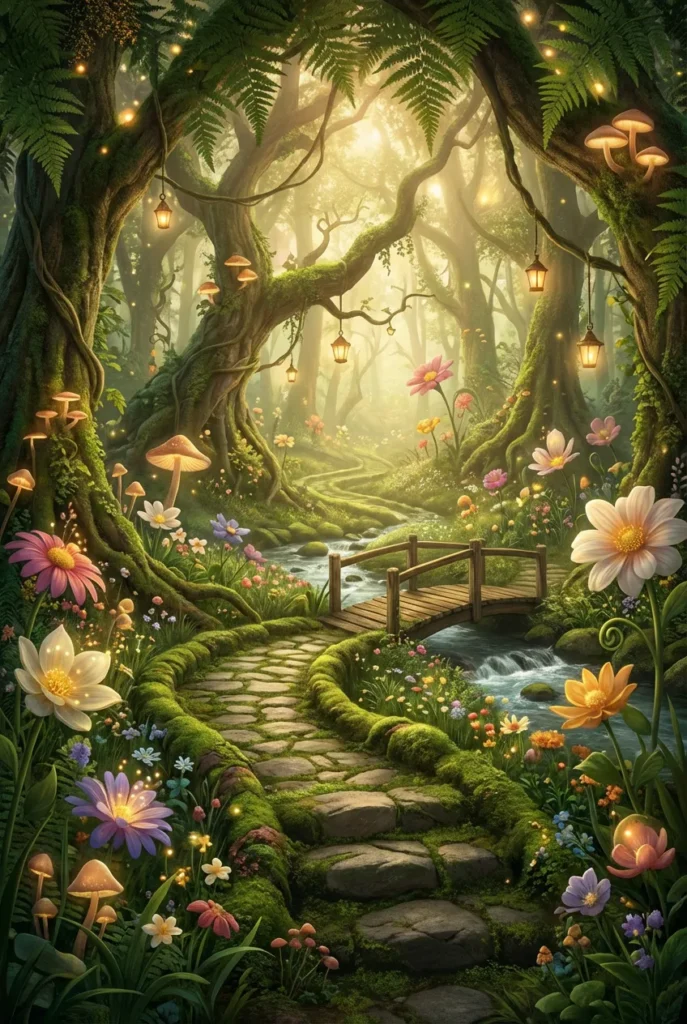
The material you choose for your pathway will set the tone for the entire whimsical aesthetic. Natural stepping stones with irregular shapes are a timeless choice. Source large, flat stones with interesting textures and lay them in a gentle curve, spacing them slightly apart so that low-growing plants like creeping thyme or chamomile can fill the gaps. When walked upon, these plants release a gentle herbal fragrance that adds another sensory layer to the experience.
Alternatively, consider a pathway made from reclaimed materials. Old terracotta tiles laid in a mosaic pattern, slices of a large tree trunk used as circular stepping pads, or even salvaged bricks arranged in a herringbone design all bring enormous character to a whimsical garden. The slightly imperfect nature of reclaimed materials is precisely what makes them feel so at home in a garden that celebrates the handmade and the unique.
Line your pathway with plants that spill over the edges in a relaxed, cottage-garden style. Lavender, catmint, alchemilla (lady’s mantle), and trailing rosemary all work beautifully as border plants. Their softness against the hardness of the pathway material creates a lovely contrast. You might also add whimsical pathway markers — small garden stakes with painted signs pointing to “The Secret Garden,” “The Fairy Dell,” or “The Wishing Well” — to add a playful, storybook narrative to the journey.
At certain points along the pathway, create moments of discovery. A bench tucked beneath a climbing rose arch, a small birdbath surrounded by ferns, or a cluster of lanterns hanging from a low branch — these pause points reward the wanderer and make the garden feel like it has hidden depth and layers waiting to be found.
3. Hang Enchanting Garden Lights Everywhere
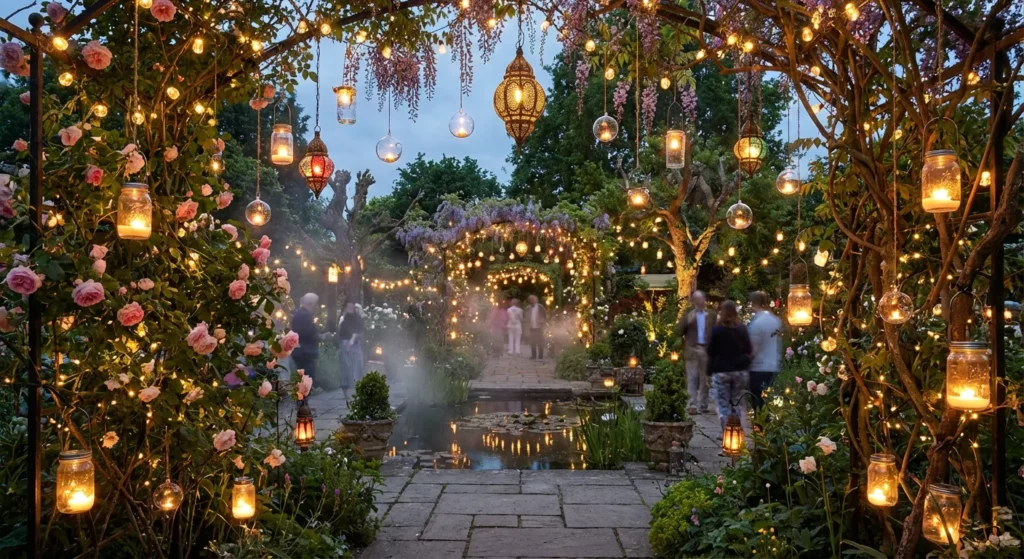
Lighting can completely transform a garden from a daytime space into a nighttime wonderland, and in a whimsical garden, lighting is one of the most powerful tools at your disposal. The right lights do not just illuminate — they create atmosphere, mood, and magic. They turn an ordinary backyard into a place that feels genuinely otherworldly after dark.
String lights are the cornerstone of whimsical garden lighting. Drape them through the branches of trees in loose, organic cascades. Wrap them around pergola beams. Hang them in a canopy above a seating area, stringing them from post to post at varying heights to create a starlit ceiling effect. Choose warm-toned bulbs rather than cool white — warmth evokes coziness, romance, and fairy-tale charm in a way that cool light simply cannot.
Beyond string lights, consider incorporating lanterns of all shapes and sizes. Vintage-style metal lanterns with glass panels look stunning hung from shepherd’s hooks or nestled among plantings. Moroccan-style pierced metal lanterns cast intricate patterns of light and shadow on surrounding plants and surfaces, creating a mesmerizing effect on summer evenings. Place a cluster of mismatched lanterns along a pathway or arrange them on a garden table as a centerpiece.
Solar-powered stake lights shaped like mushrooms, flowers, or fireflies add another playful layer to the lighting scheme. These are particularly effective placed throughout planting beds, as they seem to emerge organically from among the plants themselves. As dusk falls, they begin to glow softly, giving the impression that the garden has its own inner luminescence.
For a truly spectacular effect, consider hanging glass jar lanterns from tree branches. Fill mason jars with solar-powered fairy lights, add a coating of Mod Podge mixed with food coloring for a colored-glass effect, and hang them at varying heights with wire or twine. When the sun sets and they begin to glow, the effect is like having dozens of fireflies captured in glass — utterly breathtaking and completely unique to your garden.
4. Build a Charming Reclaimed Wood Arbor
An arbor or garden arch is one of the most romantic structural elements you can introduce to a whimsical backyard. It creates a sense of threshold — a moment of transition from one garden “room” to another — and when clothed in climbing plants, it becomes a living, breathing gateway that seems lifted straight from the pages of a fantasy novel.
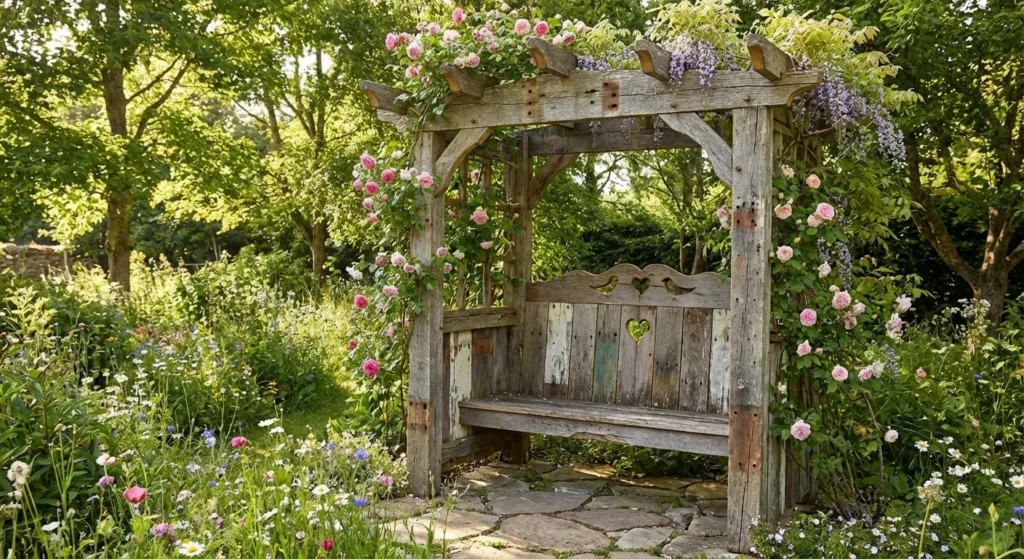
Building an arbor from reclaimed wood rather than new timber adds layers of character and history to the structure. Old fence posts, weathered barn wood, and salvaged timber all bring a rustic, time-worn quality that new materials simply cannot replicate. The slight warping, the faded patina, the occasional knot or groove — these “imperfections” are precisely what make a reclaimed wood arbor feel authentic and enchanting.
The design of the arbor can range from simple to elaborate. At its most basic, an arbor is just two upright posts connected by a crossbeam overhead, forming an inverted U shape. This simple structure is then enhanced by the plants that climb it. At its most elaborate, the arbor can include latticework side panels, decorative carvings, and multiple arching beams that create a tunnel-like effect. A tunnel arbor draped in roses or wisteria is one of the most breathtaking sights a garden can offer.
Choose your climbing plants thoughtfully. Roses are a classic choice — varieties like ‘New Dawn,’ ‘Climbing Iceberg,’ or ‘Cecile Brunner’ are vigorous, disease-resistant, and produce an abundance of blooms that cascade over the arbor in glorious profusion. Wisteria is another spectacular option, with its pendulous clusters of purple or white flowers filling the air with sweet fragrance each spring. For year-round interest, combine a flowering climber with an evergreen like star jasmine (Trachelospermum jasminoides), which provides dense, glossy foliage and intensely fragrant flowers in summer.
Enhance the whimsical quality of your arbor by adding hanging elements. Wind chimes made from driftwood and sea glass, small birdhouses attached to the uprights, bundles of dried lavender or eucalyptus tied with ribbon, or small lanterns suspended from the crossbeam all contribute to the sense of a space that has been lovingly curated and filled with charm.
5. Plant a Wildflower Meadow for Pollinators
There is a particular kind of beauty in a garden that has been allowed to grow freely, to blur the lines between cultivation and wilderness. A wildflower meadow brings this freedom to your backyard in the most glorious way — a tapestry of color, movement, and life that changes with the seasons and buzzes with the activity of bees, butterflies, and birds.

The idea of a wildflower meadow might feel intimidating, but it is actually one of the more forgiving garden projects you can undertake. The key is preparation. Begin by clearing your chosen area of existing grass and weeds, either by covering the ground with cardboard and compost for several months to kill off existing vegetation, or by carefully removing the turf. Once the ground is prepared, scatter a wildflower seed mix suited to your climate and soil type. For a truly whimsical effect, choose a mix that includes a wide variety of heights, colors, and textures.
Classic wildflower meadow plants include poppies in shades of red, orange, and salmon; cornflowers in brilliant blue and purple; ox-eye daisies with their cheerful white petals; and foxgloves with their dramatic, tower-like spires of tubular flowers. Add in some native grasses for movement and texture — they catch the breeze and create that flowing, undulating effect that makes a wildflower meadow so mesmerizing to watch.
The ecological value of a wildflower meadow cannot be overstated. By growing a diversity of native and near-native flowering plants, you are creating a habitat and food source for pollinators that are increasingly under threat. Watching a meadow in full summer bloom, alive with bees and butterflies, provides a kind of deep, quiet joy that no formal planting scheme can quite replicate.
Within the meadow, you can add whimsical touches that enhance its fairy-tale quality. Place a vintage wooden bench at the meadow’s edge. Install a hand-painted wooden sign that reads “Bee Paradise” or “Butterfly Crossing.” Scatter a few rounded boulders for visual interest and as basking spots for butterflies. Place a simple wooden sculpture — perhaps a carved rabbit or fox — partially hidden within the tall grasses, as if it has wandered in from an adjacent woodland.
6. Install Magical Water Features and Ponds
Water has always been considered magical. Its reflective surface, its gentle sound, its ability to support life — all of these qualities make water features an incredibly powerful addition to a whimsical garden. The sound of trickling water alone can transform a backyard into a sanctuary, blocking out the noise of the outside world and creating a sense of calm, secluded peace.
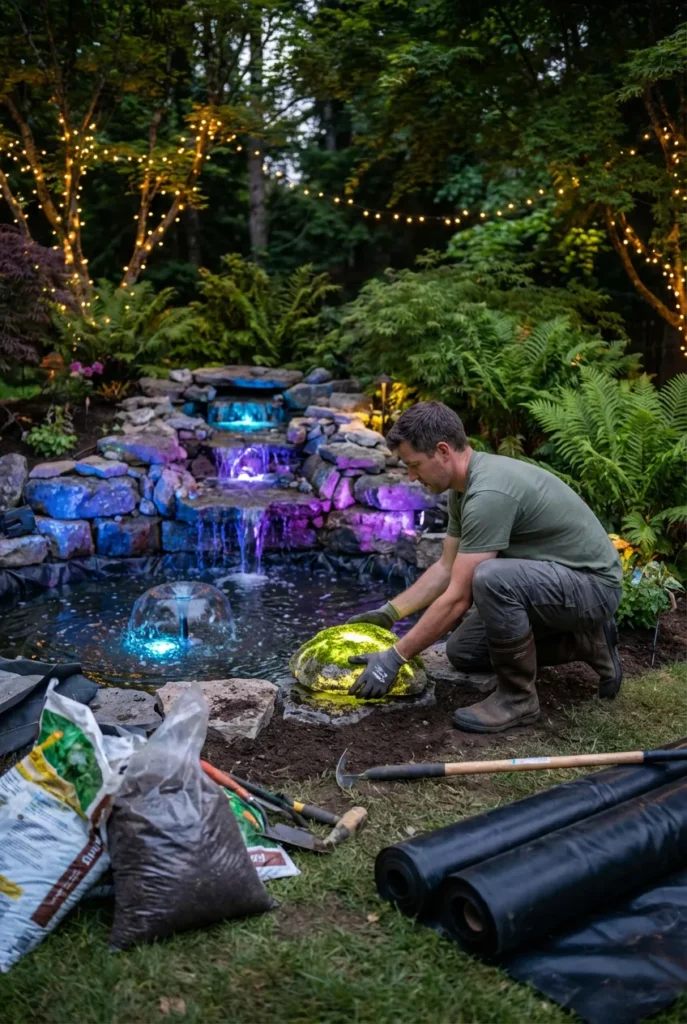
A small garden pond is perhaps the most impactful water feature you can install. Even a modest pond measuring just a few square meters can support a remarkable ecosystem — water lilies floating on the surface, dragonflies hovering above, frogs calling from the edges, and perhaps a few goldfish or koi gliding through the depths. Line the pond edges with moisture-loving plants like marsh marigolds, iris, and pickerel weed, and allow some areas of the bank to remain wild and informal, with ferns and sedges draping naturally into the water.
For a more whimsical, sculptural approach, consider installing a fountain with an unusual, artistic focal point. A stone frog spouting water into a basin, a mermaid figure surrounded by water lilies, or a simple cascade of water flowing over stacked slate creates a visual and auditory focal point that draws the eye and the ear. These sculptural fountains work beautifully as centerpieces within a circular planting bed or as anchor points at the end of a garden pathway.
Birdbaths are a simpler but no less charming way to bring water into the garden. Rather than a standard concrete birdbath on a pedestal, look for or create something more interesting — a large, hollowed-out millstone filled with water and surrounded by herbs, an upturned terracotta pot topped with a wide, shallow dish, or a vintage enamel bowl set at ground level for ground-feeding birds and hedgehogs. Surround the birdbath with flowering plants that attract birds, and place it where you can observe the activity from a window or seating area.
Rain chains are another delightful water feature that are both functional and beautiful. Replacing the standard downspout on a section of guttering, a rain chain guides rainwater down its length in a gentle cascade, tinkling and splashing as it falls. Choose a rain chain made from copper bells, flower-shaped cups, or bamboo tubes to add visual interest and a quietly musical quality to wet days.
7. Upcycle Vintage Items as Garden Art
One of the most joyful aspects of creating a whimsical garden is the opportunity it provides to look at ordinary, old, or discarded objects in an entirely new way. Upcycled garden art gives a second life to items that might otherwise end up in a landfill, and in doing so, it creates unique, personal, and often wonderfully eccentric garden features that cannot be found in any store.
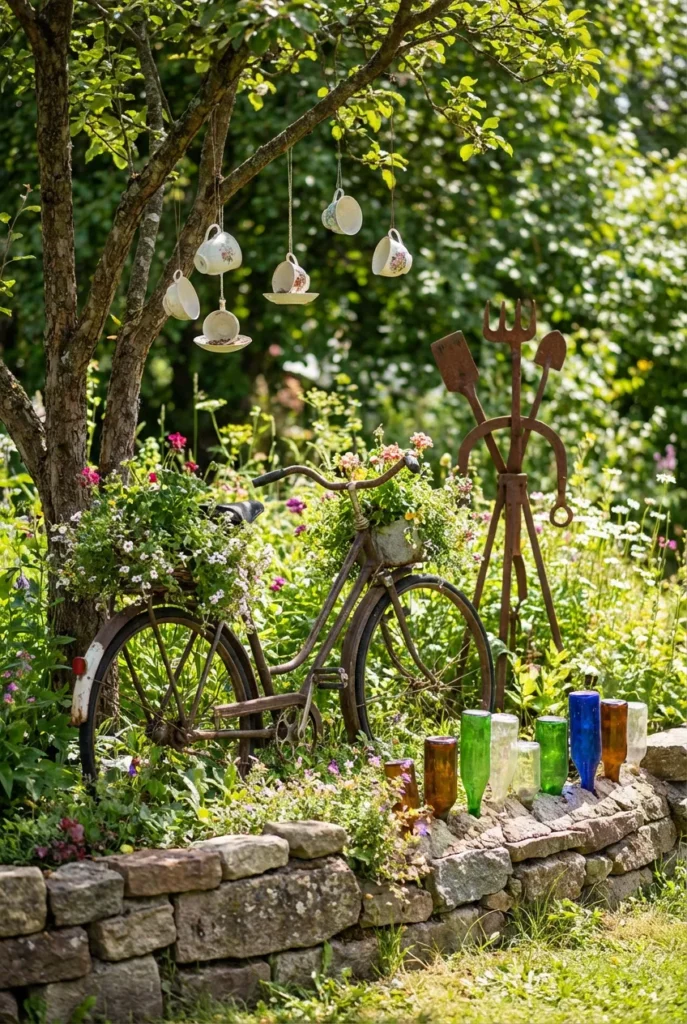
Old boots and wellies make charming planters when filled with compost and trailing flowers like nasturtiums or lobelia. A vintage suitcase opened and lined with plastic sheeting becomes a mobile garden, planted with herbs or succulents and placed beside a garden seat. An old bicycle, leaned against a fence and fitted with baskets overflowing with geraniums or lavender, creates an instantly romantic focal point. A collection of mismatched vintage colanders, hung from a fence and planted with strawberries or herbs, brings color, texture, and wit to a bare wall.
Kitchen items offer particularly rich creative possibilities. Old teapots, watering cans, colanders, and enamel jugs all make wonderful planters when given drainage holes and filled with compost. Arrange a collection of mismatched vintage pieces on a garden shelf, each planted with a different herb or succulent, for a kitchen-garden-meets-whimsy display that is as functional as it is beautiful.
Old windows and doors can be repurposed as vertical garden frames, lattice panels for climbers, or decorative focal points. A weathered wooden door frame, leaned against a wall and draped with climbing roses, creates an evocative sense of a secret entrance to another world. An old window frame hung on a fence and fitted with hooks can hold a display of hanging plants or small birdhouses. Painted in chalky pastels or deep jewel tones, these architectural salvage pieces add color, history, and character to any garden setting.
Garden sculptures and decorative pieces made from repurposed materials — a flock of birds cut from old tin cans, a fish made from salvaged spoons, a dragonfly crafted from old garden tools — add a handmade, artisanal quality that mass-produced garden ornaments simply cannot match. Better still, these are projects you can make yourself or source from local artisans, making them genuinely one-of-a-kind.
8. Design Secret Hidden Garden Nooks
Every truly magical garden has a secret — a hidden space, a tucked-away corner, a place that feels like it was discovered rather than planned. Creating secret garden nooks within your backyard adds a sense of mystery and discovery that elevates the entire outdoor experience. These are spaces designed for solitude, contemplation, and the kind of quiet joy that comes from feeling hidden from the world.
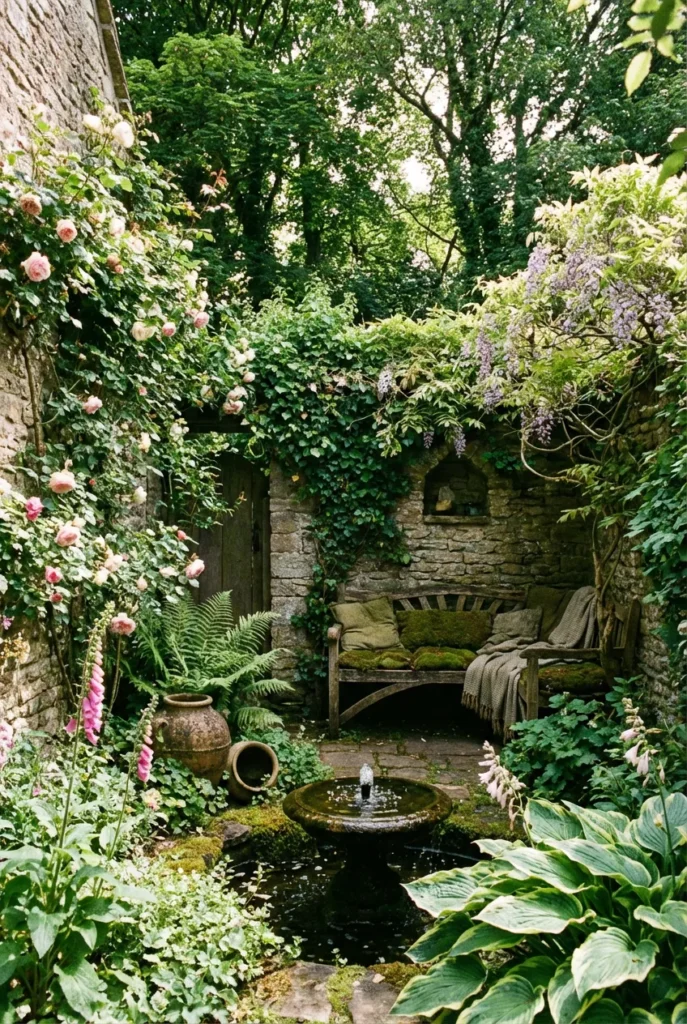
The simplest way to create a secret nook is through clever planting. Tall grasses, dense shrubs, bamboo screens, or a living willow fence can all be used to enclose a space without making it feel rigid or formal. Allow the plants to grow with a certain wildness, so that the entrance to the nook is partially obscured — a gap between shrubs, a low archway of trained branches, or a curtain of trailing wisteria that must be gently pushed aside to enter. The act of entering the hidden space should feel like an adventure.
Within the nook, create a sense of comfort and belonging. A small garden bench or a low hammock chair provides a place to rest and read. A small table holds a lantern, a pot of herbs, and perhaps a weathered ceramic cup — props that suggest the space is regularly used and loved. Surround the seating with scented plants — roses, jasmine, lavender, and sweet peas — so that the air within the nook is perfumed and intoxicating.
Add decorative details that reward the curious visitor who discovers the space. A small mosaic made from broken tiles or sea glass set into the ground beneath the bench. A collection of smooth pebbles arranged in a mandala pattern. A single wind chime of particular beauty. A little wooden sign, half-obscured by moss, that reads “You Found It.” These small details communicate that the space was designed with love and intended to be discovered.
Vertical interest is important in a secret nook. Train climbing plants up surrounding fences or walls, or install a simple trellis and allow jasmine or clematis to cover it in a rich curtain of foliage and flowers. Hang small mirrors on shaded walls to reflect light and create an illusion of greater depth and space. Attach small ceramic tiles, hand-painted with flowers or birds, to fence panels for a gallery-like display that is unique and personal.
9. Grow an Enchanting Cottage Herb Garden
Herb gardens have a long and magical history. In medieval times, herb gardens were tended by wise women and monks who understood the healing and culinary power of plants. There is still something deeply satisfying and slightly mystical about cultivating a garden full of fragrant, useful, and beautiful herbs. A cottage-style herb garden, loosely planted and abundantly fragrant, fits perfectly within the whimsical garden aesthetic.
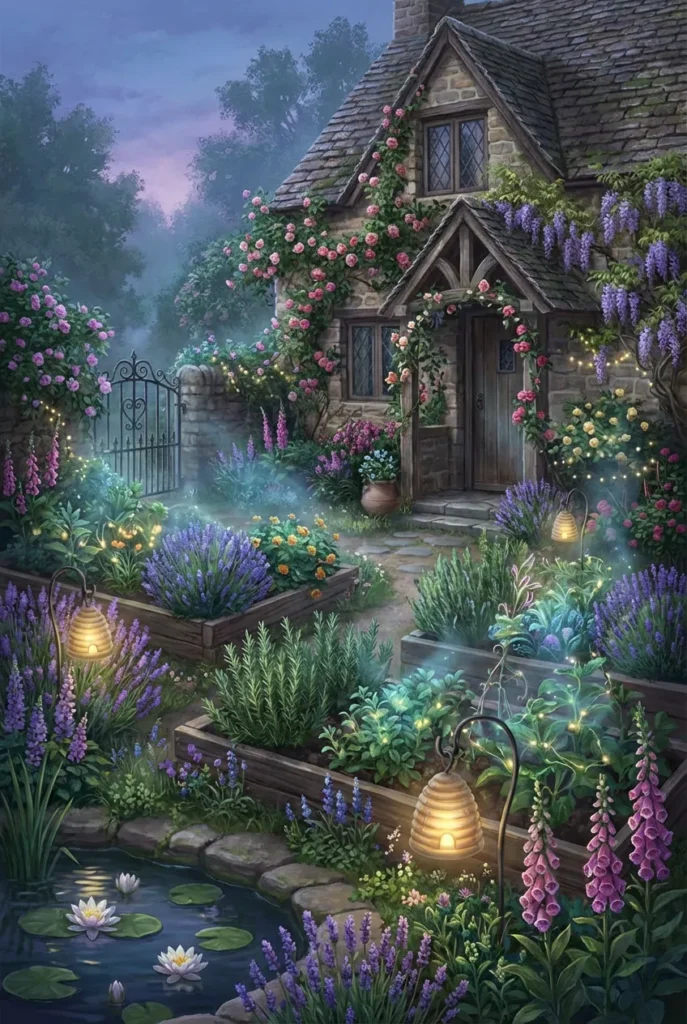
Rather than the formal, geometric patterns of a classic kitchen garden, a whimsical herb garden spills and wanders with a certain glorious informality. Herbs grown in drifts and clusters, allowed to seed themselves around and fill gaps, create a patchwork of textures and fragrances that is endlessly pleasing. Plant tall fennel and angelica at the back, mid-height rosemary, sage, and lemon balm in the middle, and allow creeping thyme and chamomile to spread along the edges and into pathways.
The visual interest of an herb garden lies in the extraordinary variety of foliage on offer. Soft silver-gray artemisia, deep purple basil, golden variegated marjoram, steely blue rue, and bright green mint (keep this one contained in a pot to prevent it from taking over) all contribute to a tapestry of color and texture that is far more interesting than many ornamental plantings. Allow some herbs to flower — borage with its brilliant blue star-shaped blooms, chives with their cheerful purple pompoms, and lavender with its famous violet spires all add a decorative dimension to the productive garden.
Incorporate whimsical elements throughout the herb garden to enhance its magical character. Ceramic herb markers painted with botanical illustrations. A carved stone trough filled with culinary herbs placed beside a garden kitchen. A collection of vintage glass cloches placed over tender herbs, giving the garden a Victorian apothecary aesthetic. A wicker beehive used as a sculptural focal point, surrounded by bee-friendly herbs like thyme, borage, and hyssop.
Consider adding a dedicated “moon garden” section within the herb garden — a cluster of white-flowering and silver-foliaged plants that glow in moonlight and evening light. White lavender, silver artemisia, white foxglove, and moonflower vine all create a hauntingly beautiful display after dark that perfectly captures the ethereal, otherworldly spirit of the whimsical garden.
10. Use Color Boldly Throughout Your Garden
Color is one of the most powerful tools in the whimsical garden designer’s toolkit. While a formal garden might favor a restrained color palette of two or three carefully curated shades, a whimsical garden embraces color with abandon — rich jewel tones alongside soft pastels, brilliant oranges next to electric purples, candy pinks contrasting with lime greens. The result, when done well, is joyful, vibrant, and undeniably alive.
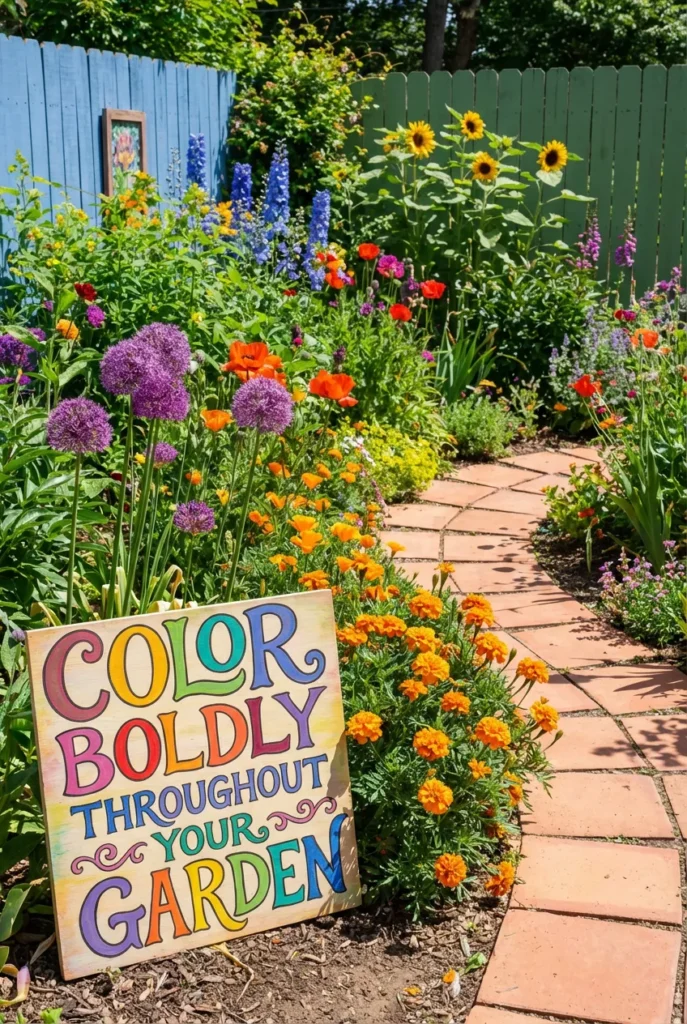
The secret to making bold color work in a garden is not to be random, but to be deliberately eclectic. Think of the garden as a painting and yourself as the artist. Choose colors that excite and delight you personally — this is, after all, your unique outdoor space. Create hot borders filled with dahlias in deep red and orange, tropical-looking cannas, and fiery crocosmia. Contrast them with cooling drifts of catmint, salvia, and agapanthus in violet and blue. Allow these contrasting areas to bleed into one another for a painterly, impressionistic effect.
Painted surfaces offer another avenue for introducing color. A garden shed painted in a deep forest green, with window frames picked out in gold, immediately becomes a charming focal point rather than a utilitarian eyesore. A fence painted in a warm terracotta provides a glowing backdrop for silver-foliaged plants and hot-colored flowers. Garden pots in mismatched sizes and a rainbow of colors, clustered together on steps or a terrace, create an instant, cheerful display that can be rearranged and refreshed with the seasons.
Garden furniture also presents an opportunity for bold color choices. A bench painted in a vivid cobalt blue. A table in deep emerald green. Chairs in mismatched hues of mustard, raspberry, and sage. In a whimsical garden, the furniture does not need to match — in fact, it is better if it does not. A collection of different seats, united by their colors and the plantings around them, creates a convivial, eclectic atmosphere that is welcoming and fun.
11. Install Handmade Mosaic Art Throughout
Mosaic art has a remarkable ability to transform ordinary garden surfaces into extraordinary works of art. The glittering, jewel-like quality of broken tiles, glass, and ceramic combined with the durability of the medium — mosaic weathers beautifully outdoors — makes it a perfect choice for the whimsical garden. And because mosaic can be applied to almost any surface, its potential applications are virtually limitless.

Begin with a simple project to develop your technique: a single mosaic stepping stone, made by pressing tiles or glass pieces into concrete mix poured into a flat mold. Choose a design that reflects the spirit of your garden — a sun, a moon, a flower, a spiral — and use colors that relate to your garden’s palette. When set and grouted, this single stepping stone will become a treasured feature that visitors will notice and admire.
Once your confidence is established, progress to larger, more ambitious projects. A birdbath covered in mosaic in shades of blue and turquoise, evoking the surface of water. A large ceramic pot with a mosaic design of climbing flowers winding around its sides. A section of garden wall decorated with a mosaic mural depicting your garden’s wildlife — bees, butterflies, birds, and frogs rendered in vivid, sparkling color. A mosaic house number panel beside the garden gate, making the very entrance to your property a work of art.
Materials for mosaic can be sourced inexpensively. Charity shops are treasure troves of old crockery that can be smashed and used — look for plates with interesting patterns and colors, vintage cups, decorative tiles, and colored glass. Sea glass collected from beaches adds a naturally weathered, organic quality. Mirror glass reflects light dramatically and adds a sparkling, magical dimension. Millefiori glass beads in jewel colors take a mosaic to another level of intricacy and beauty.
The repetitive, meditative process of cutting, arranging, and setting mosaic pieces is deeply satisfying, and the results last for decades. Each mosaic piece in your garden will become part of its unique identity — something made by your own hands that exists nowhere else in the world.
12. Plant Tall Statement Architectural Plants
No whimsical garden is complete without drama, and few things provide garden drama as effectively as bold, architectural plants. These are plants whose form, scale, or texture is so striking that they become living sculptures — focal points that anchor the garden design and provide a visual framework around which everything else is arranged.
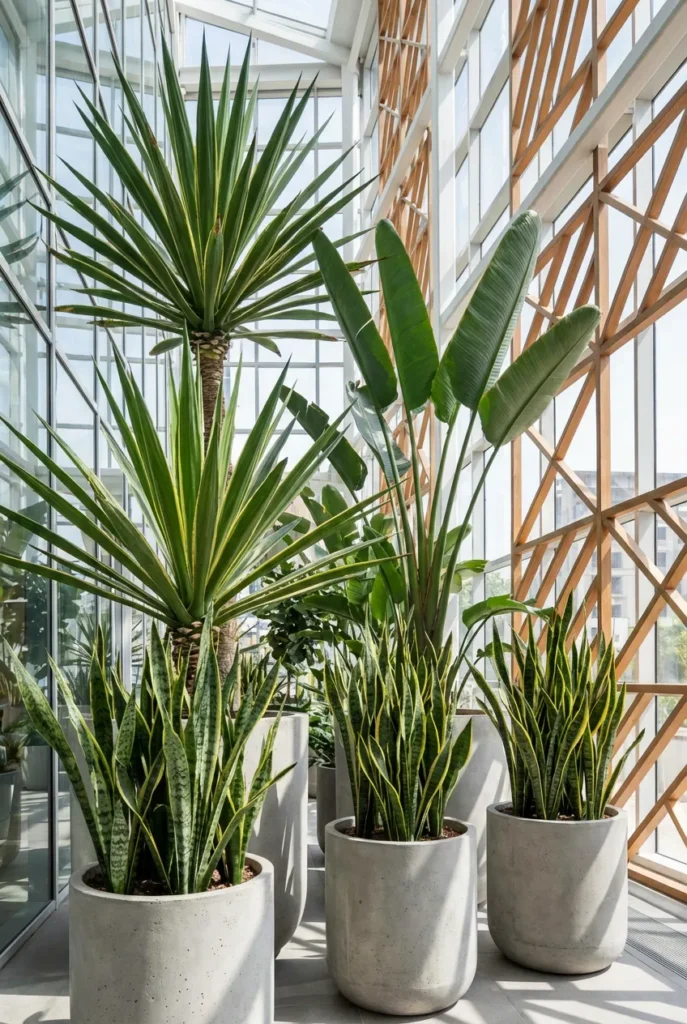
The towering spires of giant echium (Echium pininana) rising several meters high, dense with blue-purple flowers, create an almost surreal spectacle that stops visitors in their tracks. The enormous, prehistoric-looking leaves of Gunnera manicata — sometimes called giant rhubarb — create an instant rainforest feel beside a pond or in a damp corner. The sculptural stems of bamboo, swaying elegantly in the breeze and casting shifting patterns of light and shadow, bring movement, sound, and a distinctly exotic quality to the garden.
Tree ferns (Dicksonia antarctica) are among the most dramatically whimsical plants available, their great fronds unfurling above fibrous trunks to create an atmosphere of ancient, primordial forest. Place one (or several) in a sheltered, partially shaded corner and underplant with hostas, ferns, and moss for an enchanted woodland garden effect that feels genuinely other-worldly.
Alliums — ornamental onions — are extraordinary in their architectural quality. The drumstick allium (Allium sphaerocephalon) produces tight, egg-shaped heads of deep purple that erupt from slender stems and look like something from a botanical illustration. The giant allium (Allium giganteum) produces perfect spheres of purple flowers on stems that can reach over a meter in height. Mass-planted among softer perennials, alliums create a landscape that is simultaneously garden and sculpture garden.
Even in a smaller space, architectural plants can be introduced in containers. A large terracotta pot planted with a single agave or aeonium becomes an instant statement piece. A clipped topiary ball or spiral in a classical container adds structure and a touch of formal wit to an otherwise informal, exuberant planting scheme.
13. Create a Cozy Outdoor Reading Retreat
A whimsical garden reaches its full potential when it is not just looked at but lived in — and nothing embodies the spirit of a magical outdoor space quite like a dedicated reading retreat. This is a space designed for lingering, for losing yourself in a book on a drowsy summer afternoon, for watching the light change through the leaves above and listening to the bees working the lavender nearby.
The structure of a reading retreat can take many forms. A simple pergola draped in climbing roses and fitted with a comfortable bench and outdoor cushions. A converted garden shed, its interior lined with bookshelves and furnished with a deep armchair and a small wood-burning stove for cooler months. A canvas bell tent or yurt set in a corner of the garden, its interior scattered with floor cushions and lanterns. A tree house platform built around the trunk of a mature tree, reached by a simple rope ladder and fitted with a hammock.
Whatever the structure, the surroundings are what make a reading retreat feel truly whimsical. Plant fragrant climbers to frame the entrance — honeysuckle, jasmine, or climbing roses are all perfect choices. Create a sense of enclosure with tall grasses or bamboo screens. Place a small table within reach for books, a cup of tea, and a pair of binoculars for birdwatching. Install a shelf or two for potted herbs, small succulents, or a collection of interesting found objects — shells, fossils, smooth stones.
Lighting is essential for those evenings when you cannot quite bear to go inside. String lights threaded through the surrounding plants, a good outdoor reading lamp, and a collection of candles in lanterns all allow the reading retreat to transition from daytime sanctuary to evening haven. Add a lightweight blanket draped over the chair for cooler nights, and your outdoor retreat becomes a four-season space that extends the garden’s usability and magic throughout the year.
Bringing It All Together Beautifully
Creating a whimsical garden is ultimately an act of self-expression. There are no strict rules, no right or wrong answers — only the guiding principle that the garden should bring you joy, surprise, and delight. Whether you choose to implement one of these ideas or weave all of them together into a richly layered outdoor world, the most important thing is that the garden feels genuinely, authentically yours.
Start small if the scale of transformation feels overwhelming. Choose one corner, one project, one element that excites you most, and begin there. A fairy garden in a forgotten corner. A climbing rose over the gate. A mosaic stepping stone leading to a secret bench. These small beginnings have a way of growing, one idea leading naturally to the next, until the garden has quietly transformed around you into something more beautiful than you had imagined possible.
Remember that a whimsical garden is never truly finished. It evolves with the seasons, with your changing tastes, with the plants that thrive and those that do not, with the new treasures you discover and the memories you accumulate within its boundaries. It is a living project — an ongoing conversation between you, the plants, the wildlife, and the natural world.
Allow yourself to play, to experiment, to make mistakes and learn from them. Allow the garden to surprise you. Allow it to be a little wild, a little mysterious, a little imperfect. That is precisely where the enchantment lives.