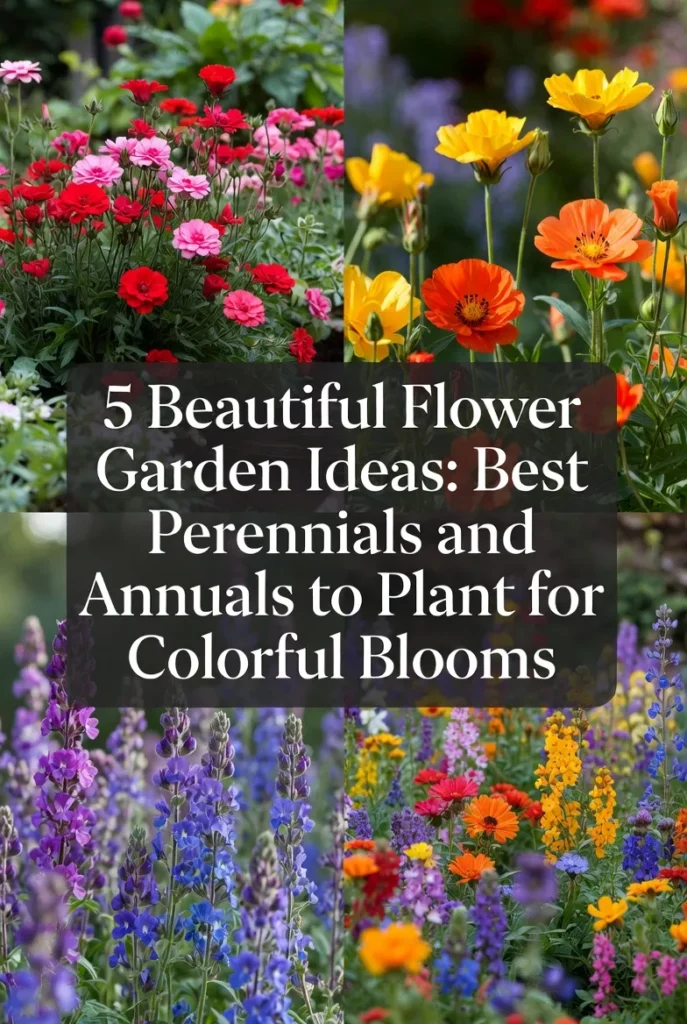

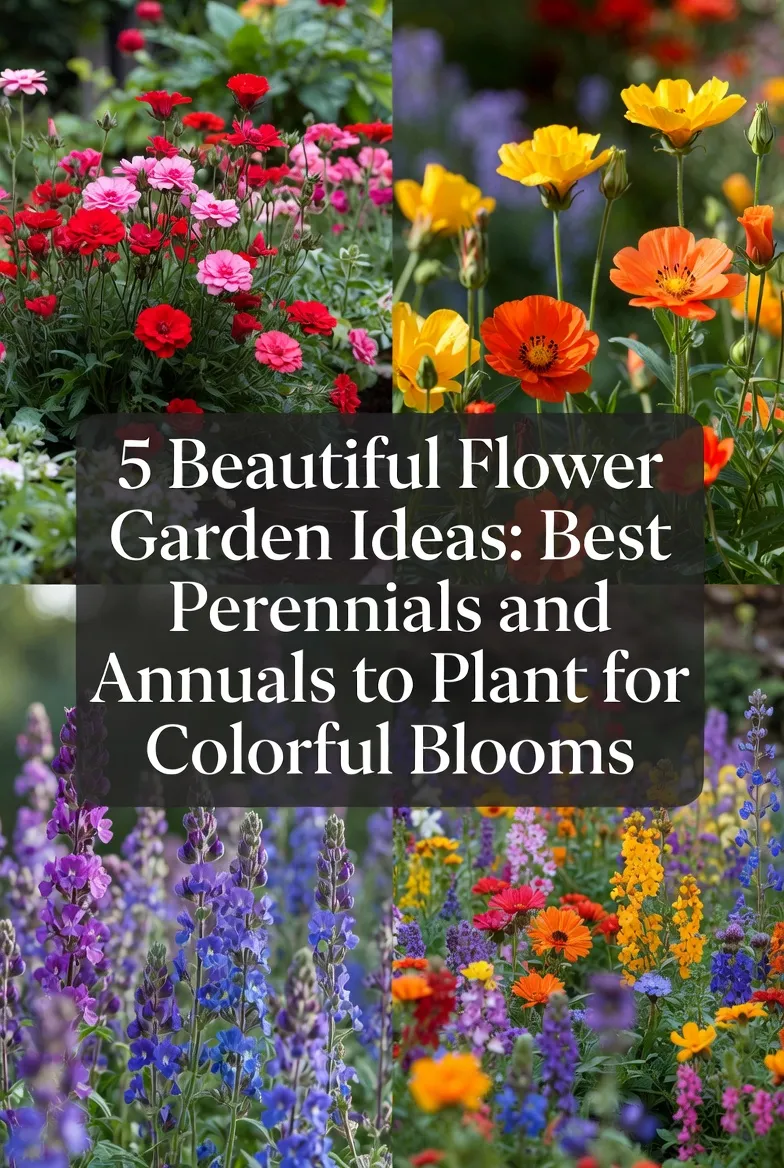
A flower garden has the power to transform any outdoor space into something genuinely breathtaking. Whether you have a sprawling backyard, a modest front yard border, or a collection of containers on a sunny patio, the right combination of perennials and annuals can fill your garden with colorful blooms from the first warm days of spring all the way through the final weeks of autumn. For many gardeners, a flower garden is not simply decoration — it is a daily source of joy, a habitat for wildlife, and a creative expression that evolves and deepens with every passing season.
The secret to a truly beautiful flower garden lies in thoughtful plant selection and smart design. Choosing plants that complement each other in height, color, texture, and bloom time creates a garden that always has something spectacular to offer, regardless of when you step outside. This guide explores five of the most inspiring flower garden ideas for home gardeners, with specific plant recommendations for both perennials that return faithfully each year and annuals that deliver extraordinary seasonal color — so you can design a garden that rewards you beautifully all year long.
Create a Classic Cottage Garden with Layers of Color

The cottage garden is one of the most beloved and enduring garden styles in the world, and it remains as popular today as it has ever been. Characterized by a gloriously informal abundance of flowering plants tumbling over one another in seemingly spontaneous profusion, the cottage garden feels simultaneously wild and wonderfully inviting. It is also one of the most forgiving styles for beginner gardeners because the slightly relaxed, overflowing aesthetic means that imperfections simply add to the charm rather than standing out as mistakes.
The foundation of a successful cottage garden is a generous mix of perennial flowers that provide structure and reliable color season after season. Delphiniums rise dramatically at the back of borders with their towering spires of deep blue, purple, or white. Peonies deliver their legendary blowsy blooms in late spring, filling the air with fragrance and the garden with romantic, full-petaled flowers in shades ranging from pure white to the deepest crimson. Roses — particularly old-fashioned shrub roses and climbing varieties — are quintessential cottage garden plants, weaving through other plantings and scrambling over arches and fences with effortless grace.
Between these larger perennial anchors, plant drifts of catmint, which forms soft grey-green mounds covered in hazy purple-blue flowers from early summer onward. Geraniums — the hardy perennial cranesbill varieties, not the tender pelargoniums used in containers — spread happily beneath taller plants, producing a continuous carpet of pink, mauve, and white flowers with very little care. Achillea, or yarrow, contributes flat-topped flower heads in warm shades of yellow, coral, and red that dry beautifully and add structure to the planting.
To weave annual flowers through this perennial tapestry and fill any seasonal gaps, choose sweet peas for their extraordinary fragrance and delicate climbing tendrils, larkspur for its tall spires of blue and pink, and nigella — love-in-a-mist — for its intricate blue flowers and architectural seed heads that look beautiful even after the blooms have faded. Cosmos is perhaps the ultimate cottage garden annual: airy, graceful, and covered in simple daisy-like flowers of pink, white, and crimson from midsummer until the first frost. Sow cosmos seeds directly into gaps in the border in late spring and they will fill empty spaces generously within just a few weeks.
The key design principle in a cottage garden is to avoid rigid spacing and military-straight lines. Let plants overlap and lean into each other. Allow self-seeders like foxglove, nigella, and aquilegia to pop up where they choose. Embrace the beautiful organized chaos that defines this style, and your cottage garden will look more glorious each year as plants establish, spread, and settle into their positions.
Design a Bold Color-Themed Border for Maximum Visual Impact

If the relaxed abundance of a cottage garden feels too unpredictable for your taste, a color-themed flower border offers a more intentional approach that delivers equally stunning results. Designing a border around a specific color palette — whether a sizzling combination of hot oranges, reds, and yellows, or a cool and calming scheme of blues, purples, and silvers — creates a cohesive, highly visual display that feels deliberately designed and deeply satisfying.
Hot-colored borders built around fiery shades are among the most dramatic garden displays possible. Perennial plants that anchor a hot border include heleniums, which produce daisy-like flowers in rich burnt orange, mahogany, and deep red from midsummer onwards. Crocosmia contributes arching stems of vivid orange and red flowers in late summer, along with attractive sword-shaped foliage that adds vertical structure throughout the season. Red hot poker — kniphofia — rises above the border in bold spikes of orange and yellow from midsummer, creating architectural exclamation points among softer, more billowing plants.
For annual flowers in a hot border, nothing surpasses zinnias. These are among the hardest-working annuals in any garden, producing an almost inexhaustible supply of vivid blooms in every shade of red, orange, yellow, coral, and magenta from early summer right through to frost. Marigolds in deep orange and burnt gold complement the perennials beautifully and have the practical benefit of deterring many common garden pests. Sunflowers, planted in taller varieties at the back of the border, add height, drama, and a sense of joyful exuberance that few other plants can match.
Cool-colored borders create a completely different atmosphere — restful, elegant, and surprisingly luminous, particularly in the gentle light of early morning and evening. Perennial cornerstones for a cool border include salvia, available in many varieties offering blue and purple flowers from late spring through summer. Agapanthus contributes magnificent globes of blue and white flowers on tall stems in midsummer, looking particularly spectacular against silver or grey foliage plants. Veronicastrum produces tall, elegant wands of pale blue or lilac flowers that sway gracefully in the breeze.
Weave through annual flowers including love-in-a-mist, scabiosa, and the intensely blue annual lobelia to reinforce and deepen the cool palette. Silver-leaved plants like artemisia and stachys — lamb’s ears — add reflective lightness and help the blues and purples sing against them with increased vibrancy.
Whatever color palette you choose, repeat key plants along the length of the border in drifts rather than planting single specimens. Repetition creates rhythm and visual coherence, making even a simple planting scheme feel thoughtfully considered and beautifully designed.
Plant a Pollinator-Friendly Garden That Blooms All Season
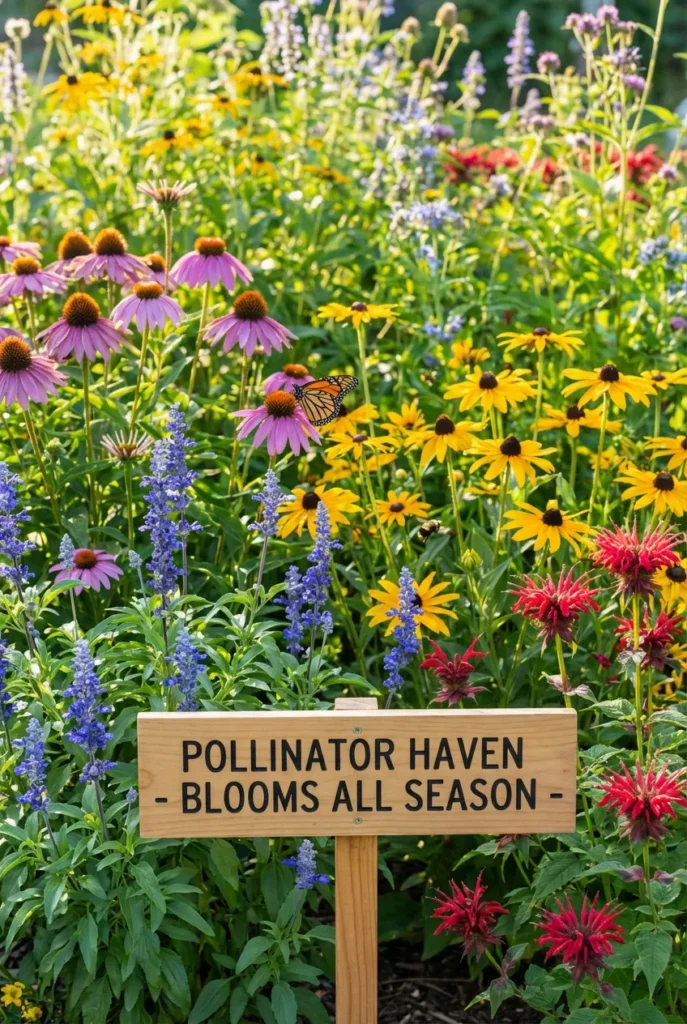
A pollinator flower garden serves a dual purpose that is deeply rewarding: it is simultaneously one of the most beautiful types of garden you can create and one of the most ecologically meaningful. Designed specifically to support bees, butterflies, hoverflies, and other beneficial insects, a pollinator garden is alive in a way that purely ornamental plantings often are not — buzzing, fluttering, and constantly visited by fascinating creatures going about their essential work.
The foundation of a great pollinator garden is a succession of flowering plants that provide nectar and pollen from the earliest days of spring through late autumn, ensuring that food sources are available to pollinators throughout their active season. Perennial plants are particularly valuable here because they establish deep root systems that support generous, consistent flowering year after year.
Echinacea — coneflower — is one of the finest pollinator perennials available to gardeners. Its large, daisy-like flowers with prominent central cones are irresistible to bumblebees and butterflies throughout summer, and the seed heads that follow provide food for finches and other seed-eating birds into winter. Plant echinacea in the bold purples and pinks of classic varieties, or explore the extraordinary range of modern cultivars in shades of orange, red, yellow, and white for a more contemporary look.
Lavender is among the most bee-loved plants in any garden. Its fragrant silvery foliage and dense spikes of purple flowers in early summer draw bees in extraordinary numbers, filling the air with a constant, contented hum on warm days. Plant lavender at border edges where its fragrance can be fully appreciated and where the contrast of silver foliage against flowering plants behind creates a beautiful visual edge.
Rudbeckia — black-eyed Susan — blooms in late summer and autumn when many other garden plants are beginning to fade, providing a vital late-season nectar source for bees preparing for winter. Its cheerful golden-yellow flowers with dark central eyes bring warmth and brightness to the garden at exactly the moment it is most needed. Pair rudbeckia with ornamental grasses, which reach their own peak of beauty in late summer and autumn, for a planting combination that looks spectacular in the slanting golden light of early autumn.
For annual flowers in a pollinator garden, phacelia is extraordinary — its vivid blue flowers produce nectar so abundantly that it is commercially grown as a bee forage crop. Borage self-seeds freely once established and produces star-shaped blue flowers beloved by bees from early summer onwards. Cosmos and zinnias continue their invaluable work here, offering long seasons of pollen-rich flowers that attract butterflies and bees alike.
Avoid double-flowered varieties of any plant in a pollinator garden. While these heavily-bred forms are often visually spectacular to human eyes, their extra petals physically block access to the nectar and pollen that pollinators need. Single-flowered forms, even of the same plant, are dramatically more valuable to garden wildlife.
Build a Low-Maintenance Perennial Garden That Rewards Year After Year
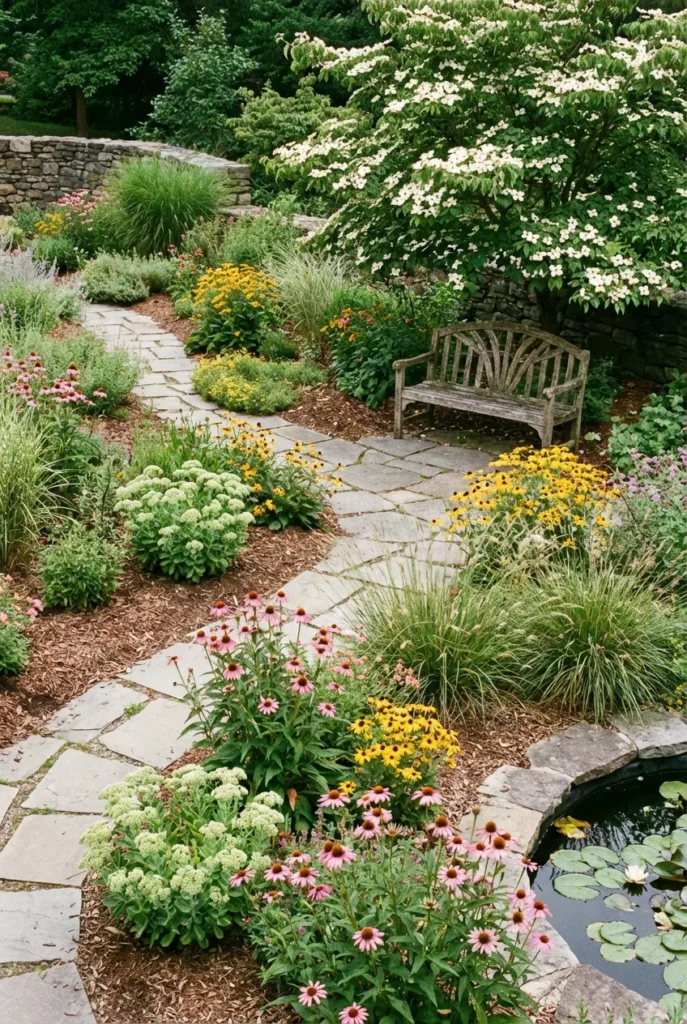
For gardeners who love beautiful flowers but have limited time for ongoing maintenance, a thoughtfully designed perennial garden is the ideal solution. Unlike annual plantings that require complete replacement each year, perennials invest their energy in building strong root systems that support increasingly impressive displays with each passing season. A well-chosen perennial garden requires the most effort in its establishment year — soil preparation, planting, and initial watering — and relatively little thereafter.
The most successful low-maintenance perennial gardens are built around tough, reliable varieties that thrive in the specific conditions of your garden without demanding constant intervention. Daylilies — hemerocallis — are the definition of reliable. These vigorous, adaptable perennials produce an abundance of trumpet-shaped flowers in an enormous range of colors including yellow, orange, red, pink, and purple. They tolerate a wide range of soil types and conditions, spread steadily to fill their allotted space, and suppress weeds effectively with their dense, strappy foliage. Each individual flower lasts only a single day, but each stem carries many buds that open in succession over several weeks.
Ornamental grasses are essential partners in any low-maintenance perennial garden. They provide movement, texture, and year-round structure that pure flowering plants cannot offer. Miscanthus grows into magnificent feathery clumps, turning shades of gold and copper in autumn and standing beautifully through winter. Calamagrostis produces upright, architectural stems that catch and hold the light beautifully. Stipa tenuissima — Mexican feather grass — forms soft, silky cascades of fine-textured foliage that sway dramatically in even the lightest breeze, creating an almost hypnotic effect throughout the season.
Sedum — now often reclassified as hylotelephium — is another cornerstone of the low-maintenance perennial border. Its succulent, drought-tolerant foliage looks attractive throughout the growing season, and its flat-topped flower heads open in late summer in shades of pink, copper, and red that deepen and intensify as temperatures drop in autumn. Leave the seed heads standing through winter for structure and bird food.
Intersperse annual flowers among your perennials during the establishment years when perennials are still growing into their space and gaps are visible. As perennials mature and fill in, the need for gap-filling annuals gradually diminishes, and your maintenance requirements reduce accordingly. By the third or fourth year, a well-planted perennial garden largely takes care of itself, needing only a spring tidy-up, occasional division of congested clumps, and a top-dressing of compost to keep performing beautifully.
Design a Container Flower Garden for Patios and Small Spaces
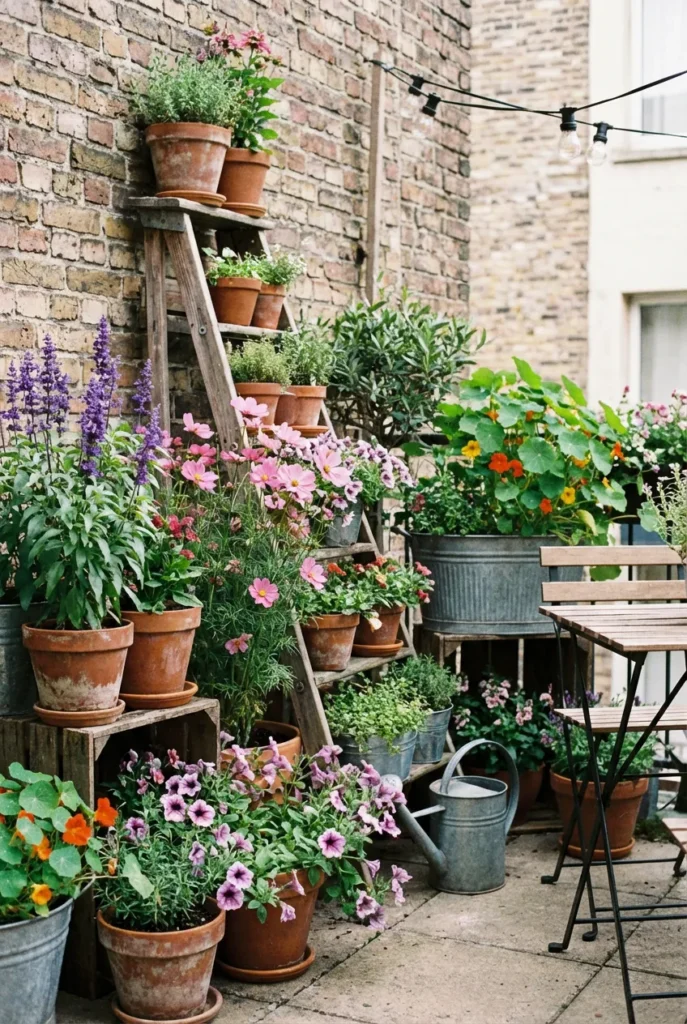
The absence of a traditional garden bed is no barrier to growing a spectacular display of colorful blooms. A container flower garden — carefully designed clusters of planted pots, window boxes, and hanging baskets — can be every bit as beautiful and rewarding as a ground-level border, and it offers the unique advantage of complete flexibility. Containers can be moved, rearranged, and updated with new plantings throughout the season to ensure that your display is always looking its very best.
The most effective container flower gardens are designed around the classic thriller, filler, spiller principle. The thriller is a tall, dramatic plant that creates height and a central focal point. The filler is a medium-height, bushy plant that creates density and covers the soil surface. The spiller is a trailing plant that flows over the edge of the container, softening its profile and visually connecting the planting to its surroundings.
For a sun-filled container, pelargoniums — often called geraniums — are among the finest annual flowering plants available. They bloom with remarkable generosity from late spring through autumn, tolerating heat and occasional drought far better than many other container plants. Their flowers come in rich reds, bright pinks, soft salmons, and pure whites, and their attractive foliage often carries distinctive dark zoning patterns that look beautiful even before and after flowering.
Fuchsias are the container flower garden’s greatest gift for shadier spots. Their pendulous, jewel-like flowers in combinations of purple, red, pink, and white are simply spectacular, and they produce these extraordinary blooms continuously from late spring until the first frosts. Trailing fuchsias work magnificently as spillers, cascading from hanging baskets and window boxes in curtains of color.
For perennial plants in containers, agapanthus performs beautifully in large pots, rewarding slightly restricted roots with even better flowering. Lavender thrives in terracotta containers and looks classically beautiful paired with silvery artemisia and trailing blue lobelia. Heucheras — coral bells — offer extraordinary foliage interest in shades of burgundy, copper, lime green, and caramel, providing a dramatic background against which flowering plants shine even more brightly.
The most important practical consideration in container gardening is feeding. Container plants exhaust the nutrients in their potting mix relatively quickly, and regular liquid feeding throughout the growing season — every one to two weeks during peak growth — is essential to maintaining the generous flowering that makes container displays so impressive. Use a high-potassium liquid fertilizer formulated for flowering plants once buds begin to appear, and deadhead spent flowers regularly to encourage continuous blooming throughout the season.
Bringing Your Flower Garden Vision to Life
The most beautiful flower gardens are not created in a single season. They evolve gradually as plants establish, as you learn what thrives in your specific conditions, and as your own taste and confidence develop. The ideas in this guide — from the romantic abundance of a cottage garden to the ecological richness of a pollinator planting to the elegant simplicity of a well-designed container display — are starting points, not prescriptions.
Choose the style that genuinely excites you, select a thoughtful mix of perennials and annuals that suit your soil and climate, and begin with whatever space and budget you have available. A single beautifully planted raised bed, a cluster of lovingly chosen containers, or a modest new border along a sunny fence is enough to begin. The experience of watching your first flower garden grow, bloom, and come alive with visiting bees and butterflies will inspire you to expand and deepen your planting with every season that follows.
Colorful blooms are one of the most reliable sources of everyday joy that gardening offers. Start planting, and let your garden give that joy back to you in abundance. 🌸